
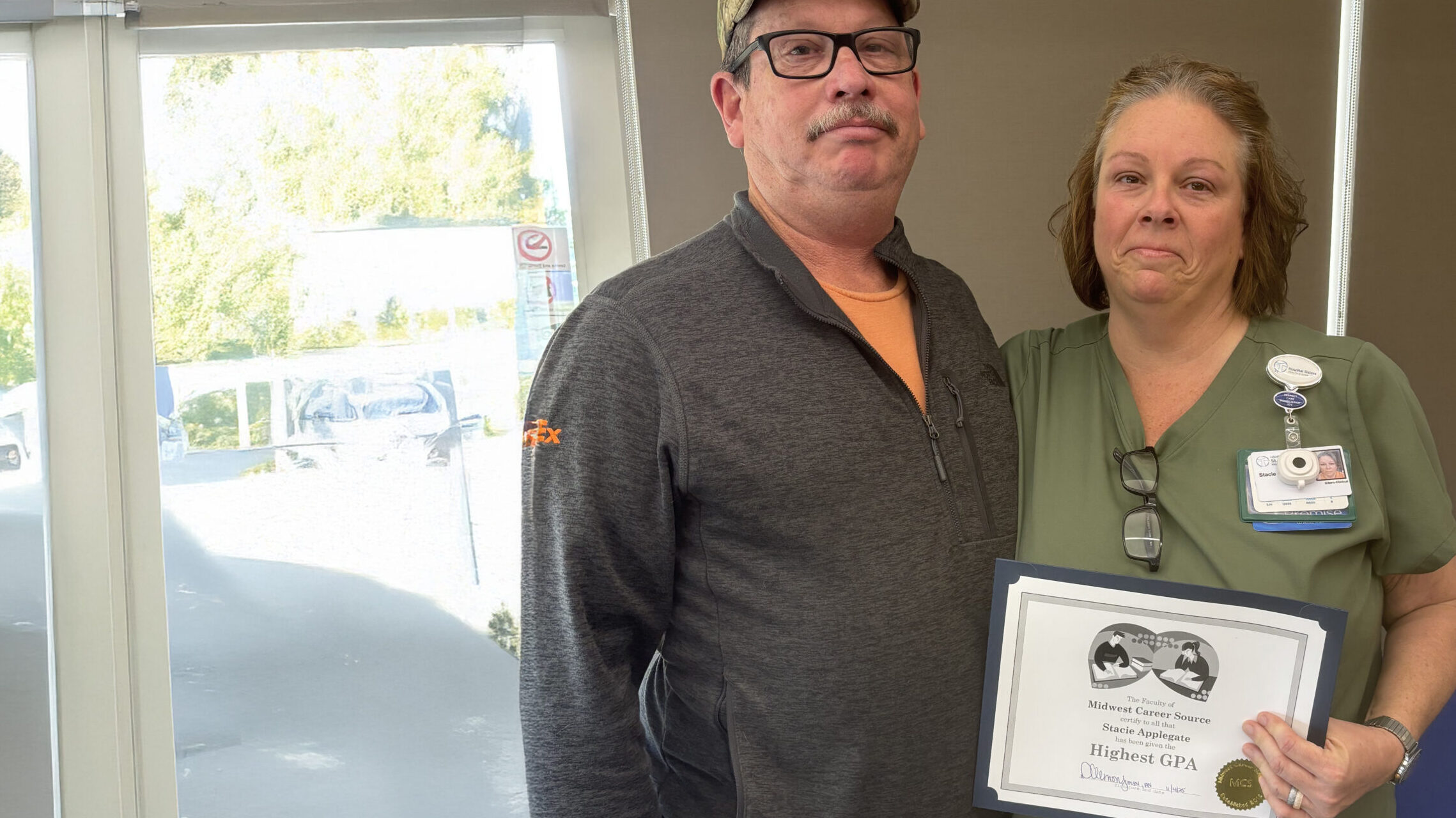
After spending most of her working life in office roles, Stacie Applegate reached a turning point. She had taken five years away from work to care for her mother before she passed, and when the time came to return, she knew she did not want to go back to a cubicle. The experience of having hospice care in her home stayed with her. The compassion and professionalism she witnessed sparked a new idea. Maybe there was a way to help others in the same meaningful way.
Stacie began searching for a path into healthcare, even though she had no medical credentials. That search led her to the HSHS St. Elizabeth’s Hospital website, where she found an accelerated, paid Certified Nursing Assistant apprenticeship. She applied, taking a chance on a new future. It turned out to be exactly the opportunity she had been waiting for.
Why Registered Apprenticeship?
Several things stood out immediately. The pace was accelerated. A typical CNA program might take a full semester, but this one moved quickly, with five weeks of class and just over a week of clinical training. It also offered real security. If Stacie completed the course successfully, she would be guaranteed a one-year employment contract with the hospital.
Just as important, the apprenticeship removed a major barrier for adults changing careers. It allowed Stacie to earn a paycheck and benefits while she trained.
From the first day of orientation, she was paid and eligible for benefits. She also began earning paid time off immediately. For someone returning to the workforce and stepping into a demanding new field, that kind of support mattered. It made the decision not only possible, but practical.
A New Career at 55
Starting over at 55 came with real concerns. Stacie worried about being an older student and making a complete career change later in life. But she wanted the work, and she had support at home. Her husband encouraged her and reminded her that caring for people came naturally to her.
She threw herself into the program. She worked hard in class, and she proved to herself that she belonged there, graduating first in her class. She also discovered quickly that she could keep up with the pace of hospital life, including 12-hour shifts and long days on her feet.
The apprenticeship required significant adjustments. Stacie and her husband manage a three-acre homestead with small livestock, and the program demanded five days a week of training an hour from home. She also regularly provided childcare for her granddaughter, which had to pause during the most intense weeks. The tradeoff was worth it. The training period was short, and the long-term stability it created for her family was lasting.
Learning in the Real Environment
One of the most powerful aspects of Stacie’s experience was learning inside the hospital setting from the beginning. During orientation week, she toured the facility, learned essential systems, and shadowed experienced CNAs on the floor. Those early days gave her a clear view of what the job required and helped confirm she had chosen the right path.
Training continued in the hospital every day. After classroom instruction, Stacie practiced skills in a dedicated hospital room equipped with real equipment such as a hospital bed, a mechanical lift, and clinical tools. That hands-on learning made the transition to the floor more natural and helped build confidence quickly.
She also credits the instructional model that kept her engaged and supported. The program used a flipped classroom format, with recorded lectures watched at home and class time focused on questions, review, and practical learning. For Stacie, that structure made a fast program feel manageable, even when the pace was intense.
Benefits for Employers and Communities
Stacie’s program experience reflects what Registered Apprenticeship makes possible for adults seeking a new career. It created a pathway that did not require her to stop earning income while training, and it gave her real experience in a real hospital environment from the start.
She believes the employer benefits are clear. A paid apprenticeship attracts candidates who would not otherwise be able to pursue training. It creates a pipeline of committed workers who enter the role with practical experience and a strong understanding of hospital culture.
It also strengthens retention. When individuals are supported from day one with pay, training, and a clear employment pathway, they are more likely to stay, grow, and build a long-term career within the organization.
Looking Ahead
Stacie is thriving in her new role. She works three 12-hour shift days a week, which gives her time for family responsibilities and personal appointments while still maintaining full-time employment and benefits. She has already accrued paid time off and appreciates the stability and structure the job provides. Most importantly, she has found something she did not have before, genuine excitement about going to work.
“This is the first job I’ve ever had where I’m excited to get up and go to work,” she shared.
Next, she plans to take the step she once only considered as a possibility. She intends to apply to nursing school and become a registered nurse, using the hospital’s tuition reimbursement and advancement supports to continue climbing the career ladder.
“This apprenticeship made it possible for me to change careers without putting my life on hold. I was paid, supported, and learning in the hospital from day one. It gave me a future I did not think was still possible at 55.”
— Stacie Applegate
Back to all Registered Apprenticeship Success Stories